
Negros with kids: car seats, long drives and what actually works
What do I need to know about travelling around Negros with young children?
Short answer
Two things catch families out in Negros. First, the Philippine child car seat law (Republic Act 11229, the Child Safety in Motor Vehicles Act) requires an age and size appropriate child restraint for any child aged 12 or under who is shorter than 150 cm, and keeps that child out of the front seat, but it is written around private motor vehicles: buses, jeepneys and taxis are not covered yet, and tricycles and motorcycles are excluded from the law altogether. Nothing waiting at a bus terminal or a taxi rank will have a seat for your toddler. Second, Negros is a bigger island than it looks, and the Bacolod to Dumaguete crossing is roughly 195 to 215 km and about 6 hours via Mabinay, nearer 6.5 to 7 if you are starting from Bacolod-Silay airport, which is a long day with a baby unless the stops are planned in. Tell us your children’s ages, heights and weights when you ask for a quote and we will confirm what can be fitted before you commit to anything.
Negros is a good island to bring children to. The distances between the headline sights are short on the Dumaguete side, the water at Manjuyod and Dauin is shallow and calm, and a lot of the best days out are boat rides and waterfalls rather than long queues. What tends to go wrong is not the island, it is the transport: families arrive expecting a car seat to appear the way it would at home, and expecting the map to be smaller than it is.
This is the practical version. What the Philippine child seat law actually requires and which vehicles it covers, how long the island’s real drives take, and what to tell us so the quote that comes back already accounts for your children.
Want the easy version?
Tell us your dates and plan, and we will quote the private car and driver around this guide. No payment now, no obligation.
What the Philippine child car seat law actually requires
The rules come from Republic Act 11229, the Child Safety in Motor Vehicles Act, signed in February 2019. It is short and specific, and worth knowing before you travel because it shapes what you should be asking for.
Who it applies to
Any child aged 12 or under. The child may travel in a regular seat belt instead of a restraint once they reach 150 cm (59 inches) in height, whichever comes first.
What is required
A child restraint appropriate to the child’s age, height and weight, properly secured whenever the engine is running. The approved standards are UN Regulation 44 and UN Regulation 129, and restraints sold in the Philippines carry a PS mark or an ICC sticker.
The front seat
No child aged 12 or under travels in the front seat unless they already meet the 150 cm height rule and use the regular belt. This one surprises people with older children.
Penalties
The fine falls on the driver: 1,000 pesos for a first offence, 2,000 for a second, and 5,000 plus a one year licence suspension for a third.
The exceptions
The restraint requirement is lifted during a medical emergency, or where a child has a medical or developmental condition that a restraint would make worse. A child is never to be left in a vehicle without an adult.
The gap most families do not expect: buses, taxis and tricycles
Here is the part that is rarely spelled out. The law bites on private motor vehicles. Public utility vehicles, the jeepneys, buses, taxis, vans and coasters, only come under it once the Department of Transportation determines that they should, and the Act itself directs the DOTr to study that question and report back to Congress. That study has not yet produced a rule, so as things stand a Ceres bus or a taxi at the rank is not required to carry a restraint and will not have one. Tricycles and motorcycles sit further outside again: the Act’s definition of a motor vehicle excludes them entirely.
The practical consequence for a visiting family is simple. The public options that get everyone else around Negros are the ones least able to help you, and the vehicle where the duty is clearest is a car. That is also exactly why it is worth asking in advance rather than assuming, on any private hire anywhere in the country, ours included: a vehicle for hire sits in the part of the law the DOTr has not finished ruling on, so the honest answer is that a seat is something to confirm, not something to take for granted.
We do not own the vehicles, we arrange them, so we will not tell you a restraint is guaranteed to be sitting in every car. What we will do is take your children’s ages, heights and weights with the enquiry and confirm what can be fitted before you commit to anything. If you already travel with your own seat, say so, because bringing it is often the cleanest answer and it changes the luggage space we need to quote for.
Negros is a bigger island than it looks
The single biggest planning mistake families make here is treating the two halves of Negros as neighbours. Dumaguete sits at the south-east end, Bacolod at the far north-west, and the crossing between them runs about 195 to 215 km inland over the mountains at Mabinay: roughly 6 hours by private car city to city, about 6.5 to 7 if you are starting or finishing at Bacolod-Silay airport, and longer again by Ceres bus once you add the terminal change. It is a full day, and it is not a day to attach to the end of a flight.
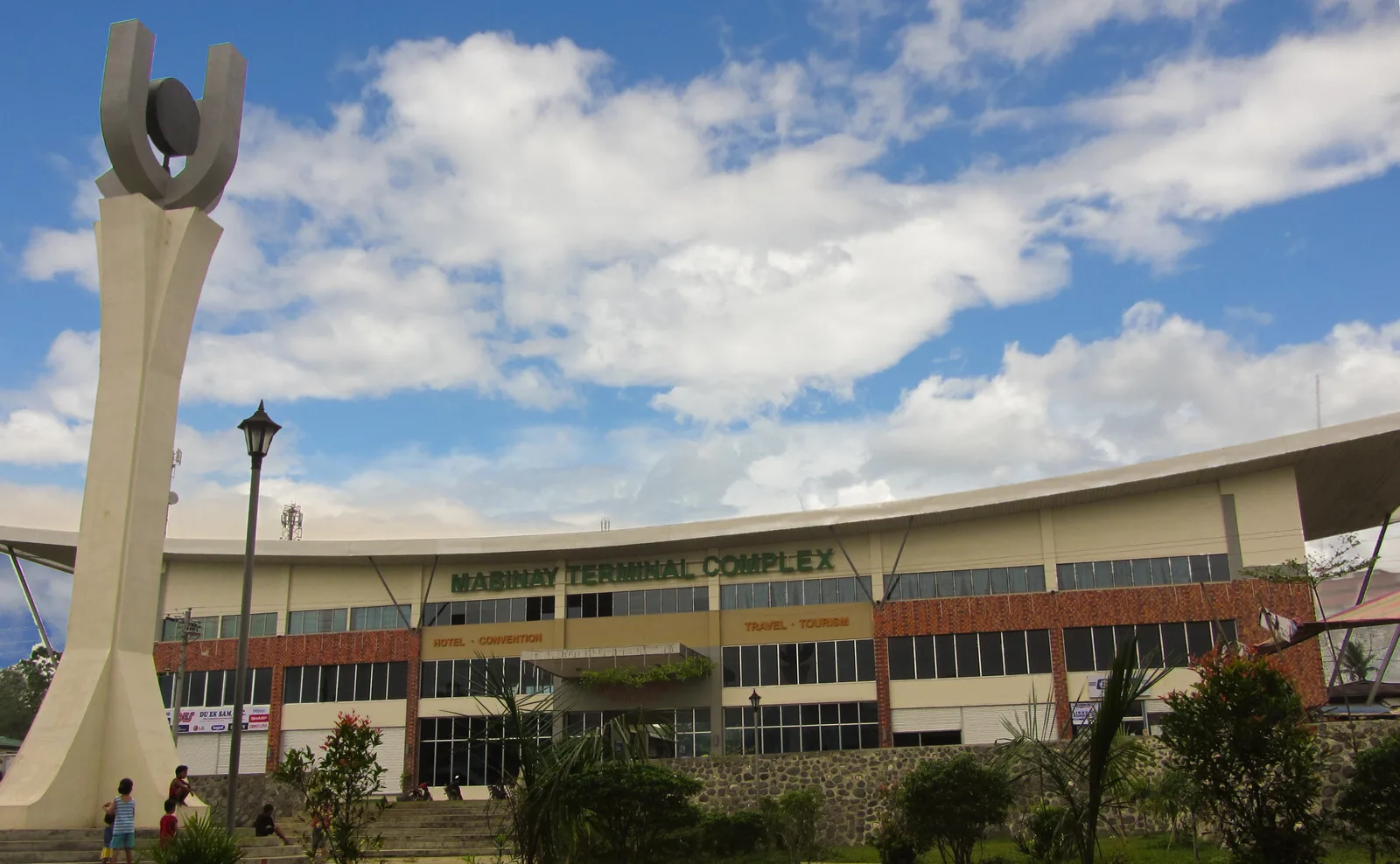
Mabinay sits near the midpoint, about 87 km and two hours from Dumaguete, and its terminal complex on the highway is the natural place to stop, stretch and change a nappy. If your children travel well, the Bulwang caves are a twenty minute tricycle ride from that terminal and turn the halfway break into the reason for the day rather than an interruption to it.
Almost everything else is mercifully short. Dumaguete’s Sibulan airport is about 7 km from the city, a 10 to 15 minute run. Dauin and Valencia are both well under an hour. Bais, for the dolphins and the Manjuyod sandbar, is a comfortable morning. On the other side, Bacolod-Silay airport is about 15 km out, 30 to 40 minutes into the city. A trip built on the short legs, with the cross-island drive treated as its own deliberate day or skipped in favour of flying into the nearer hub, is a much easier holiday with a toddler.
A car is the only vehicle you can shape around a nap
The reason families end up in a private car here is not usually the seat, it is the schedule. A bus leaves when it leaves and stops where it stops. With a private driver the day bends around your children instead: you leave after the morning nap rather than before it, you stop when someone needs to be fed, the bags stay in the boot while you are at the falls, and the air conditioning stays on. On a six hour crossing that is the difference between a hard day and an easy one.
It also means one vehicle for the whole party. Counting heads honestly matters more than counting paying adults: a toddler on a lap and a baby in a carrier still occupy space, and a child restraint takes a full seat of its own. Tell us the real number and we will size the vehicle for it rather than sending something you have to repack at the kerb.
What to tell us so the quote comes back right
The quote form has a box for all of this, and a family enquiry that fills it in properly comes back answered in one reply instead of three.
Tick the child seats box
It opens a details field. Put each child’s age, height and weight in it. Age alone is not enough to choose a restraint, and the law is written around height as much as age.
Count every passenger
Include children who will not take a seat of their own. The real headcount, plus any restraints, is what decides the vehicle.
Say if you are bringing your own seat
Your own restraint is usually the best fit for your child, and it is expressly allowed as long as it has not expired. It does take luggage space, so we would rather know.
Flag the timings that matter
Nap windows, a feed stop, an early flight. Put them in the notes. They change how the driver plans the run, and on a long leg they change which route makes sense.
Tell us about the bags
Pushchairs, travel cots and car seats are bulky in a way that suitcase counts do not capture. A van instead of a sedan is a cheaper fix at the quoting stage than at the kerb.
Frequently asked questions
Do I need a car seat for my child in the Philippines?
In a private vehicle, yes. Republic Act 11229 requires an age, height and weight appropriate child restraint for any child aged 12 or under who is under 150 cm tall, and keeps that child out of the front seat. Public utility vehicles such as buses, jeepneys and taxis are not covered yet, and tricycles and motorcycles are excluded from the law entirely.
Can you provide child seats for a transfer in Negros?
Tell us your children’s ages, heights and weights when you request a quote and we will confirm what can be fitted before you commit to anything. We arrange the vehicles rather than owning them, so we would rather check than promise. If you are travelling with your own restraint, bringing it is often the cleanest answer, and we will allow for the extra luggage space.
Are taxis and buses in the Philippines required to have child seats?
No, not at present. RA 11229 applies to private motor vehicles, and public utility vehicles come under it only once the Department of Transportation determines that they should. The Act directs the DOTr to study the question, and no rule has followed, so a bus or a taxi will not have a restraint for your child.
How old does a child have to be to sit in the front seat in the Philippines?
It is height as much as age. No child aged 12 or under may travel in the front seat unless they are at least 150 cm (59 inches) tall and use the regular seat belt.
How long is the drive from Bacolod to Dumaguete with young children?
About 6 hours by private car for the roughly 195 to 215 km via Mabinay city to city, or 6.5 to 7 hours if either end is Bacolod-Silay airport, which sits about 15 km north of the city. Longer again by Ceres bus with the terminal change. Mabinay sits near the midpoint, about two hours from Dumaguete, and its highway terminal is the natural stop. Treat the crossing as its own day rather than adding it to a flight day.
Which side of Negros is easier with a toddler?
The Dumaguete side, on distances alone. The airport is 10 to 15 minutes from the city, Dauin and Valencia are both under an hour, and Bais and the Manjuyod sandbar make a comfortable morning. Bacolod is the better base for food, heritage and MassKara, but its own sights are more spread out.
What is the fine for not using a child car seat in the Philippines?
The fine falls on the driver: 1,000 pesos for a first offence, 2,000 pesos for a second, and 5,000 pesos plus a one year licence suspension for a third or subsequent offence.