
Getting around Negros: your options from the airport to Apo Island
What is the best way to get around Negros and Dumaguete?
Short answer
Negros has two hub cities, Dumaguete in the east and Bacolod in the west, each with its own airport. Around town you rely on tricycles, jeepneys and the local Easy Ride multicabs, plus metered taxis in Bacolod, since ride-hailing apps barely cover the island. Ceres buses and shared vans are the cheap way to travel long distances along the coast, and boats reach Apo Island, Siquijor and Cebu. For airport pick-ups, day trips to Apo Island, Casaroro Falls, the Bais dolphins or Mambukal, and any journey that has to meet a ferry, most visitors are far more comfortable in a private car with a driver: one fixed price, met on arrival, door to door.
Negros is a big island split down the middle by a mountain range, with two very different sides. The east, around Dumaguete in Negros Oriental, is your base for Apo Island, Casaroro Falls, the Twin Lakes and the Bais dolphins. The west, around Bacolod in Negros Occidental, is the hub for Mambukal, the sugar-country heritage towns and the MassKara festival. Each side has its own airport, and a coastal highway plus a mountain crossing link the two.
How you get around depends entirely on where you are going: short hops inside Dumaguete or Bacolod are cheap and easy, while the best day trips and the cross-island runs involve real distances, winding roads and timed boats. This guide runs through every practical option and where each one shines. Where a trip is long, early, or has to connect with a ferry, we quote a private car and driver: one fixed, all-in price, timed around your flights and your plans, so you can just enjoy the ride.
Want the easy version?
Tell us your dates and plan, and we will quote the private car and driver around this guide. No payment now, no obligation.
The main ways to get around
Negros has the full range of Philippine transport, though it is more low-key than Cebu or Manila. Here is what each is good for.
Private car and driver
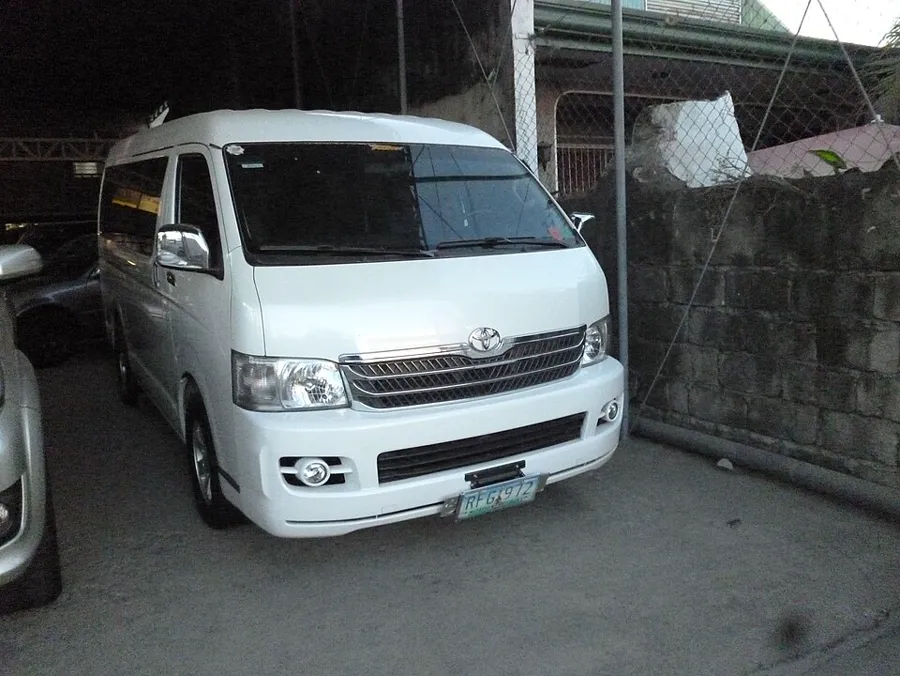
Your own vehicle and driver for a transfer, a full day or several days. Best for airport pick-ups, day trips to Apo Island, the Bais dolphins, Casaroro Falls or Mambukal, and any journey that has to meet a ferry. Door to door, met on arrival, one fixed price agreed up front, and you set the pace. This is what we arrange.
Tricycles
The workhorse of every Negros town, a motorbike with a sidecar for short hops around Dumaguete, Bacolod and the provinces. Cheap and everywhere. Agree the fare before you set off, especially for a special trip rather than a standard route, and note they are not built for luggage or groups.
Easy Ride and jeepneys
In Dumaguete the small Easy Ride multicabs run fixed city routes for a few pesos, and traditional jeepneys do the same in Bacolod and along provincial roads. The cheapest way to move around a city on short hops, though routes take some learning and they are not made for bags.
Taxis and ride-hailing
Bacolod has metered taxis, which are handy for the airport run and around the city. Dumaguete has very few, so tricycles fill that role there. Ride-hailing apps like Grab barely cover Negros compared with Cebu or Manila, so do not count on one, especially outside the two cities.
Ceres buses
Vallacar Transit (Ceres Liner) is the backbone of long-distance travel, running the coastal highway that loops the island and the mountain shortcut between Dumaguete and Bacolod. Cheap and frequent, but slower with many stops, and you still need onward transport at the other end.
Shared vans (V-hire)
Air-conditioned vans run point to point between the main towns, faster than the bus but they leave when full and can be a squeeze with luggage.
Motorbike taxis (habal-habal)
A single-passenger motorbike ride arranged locally, useful for reaching spots buses and tricycles do not, like the trailheads for waterfalls. Not for luggage, groups or long distances.
Ferries
Boats connect Negros to its neighbours: fast craft from Dumaguete cross to Cebu, Siquijor and Bohol, and from Bacolod across to Iloilo on Panay. Small boats reach Apo Island from the mainland. Fares are paid at the port and schedules shift with the weather, so timing your road leg to connect matters.
Getting from the airports
Negros has two commercial airports, one on each side of the island. Dumaguete-Sibulan (DGT) sits just north of Dumaguete, roughly 15 to 25 minutes from the city seafront depending on traffic, and is your gateway to Apo Island, Valencia, Bais and Siquijor. Bacolod-Silay (BCD) is about 15 kilometres north of Bacolod, usually a 30 to 45 minute drive into the city, and serves Mambukal and the Occidental heritage towns.
At either airport you can arrange a tricycle or, in Bacolod, a metered taxi, but after a long flight a pre-booked car with your name on a sign and a fixed price already agreed is the easy way to start, especially with luggage, at night, or if you are heading straight to a resort, a ferry port or a day-trip town rather than into the city.
Day trips from Dumaguete
Most of Negros Oriental’s headline sights are within easy reach of Dumaguete, but each involves a specific road leg and, for the islands, a boat:
Apo Island
Drive about 40 minutes south to the boat launch at Malatapay in Zamboanguita, then a short outrigger crossing to the marine sanctuary. A timed private transfer means the car waits while you snorkel and dive.
Bais dolphins and Manjuyod sandbar
Head roughly 45 minutes to an hour north to Bais for a dolphin-watching boat trip and the long white Manjuyod sandbar. An early start gives the best chance of calm seas and active dolphins.
Valencia and Casaroro Falls
A short climb of around 30 minutes west into the hills reaches cool Valencia and the trailhead for the dramatic Casaroro Falls, an easy half-day.
Twin Lakes (Balinsasayao)
North of the city near San Jose, then a sealed but steep and winding climb to the twin crater lakes, best tackled in a vehicle in good order with a driver who knows the descent.
Siquijor
A fast craft of about an hour from Dumaguete port reaches the mystical island of Siquijor, an easy day trip or overnight with a timed transfer to the pier.
Crossing to Cebu and beyond
The quickest way between Negros and Cebu is the short fast-craft hop from Sibulan, right next to Dumaguete, across to Liloan in Santander at the southern tip of Cebu, a crossing of only around 25 minutes with frequent sailings. From there it is a road leg up the Cebu coast to Oslob, Moalboal or Cebu City. Larger ferries also link Dumaguete directly with Cebu City, Tagbilaran on Bohol and Siquijor.
On the western side, Bacolod’s port sends fast ferries across the Guimaras Strait to Iloilo City on Panay in about an hour, the main gateway between Negros Occidental and the rest of the western Visayas. Whichever crossing you take, the value of a private car is timing the road leg so you reach the pier relaxed and on time, and having a car waiting on the far side.
Should you rent a car and self-drive?
Self-drive rental is possible in Negros, but most visitors find a car with a driver the easier choice. The island’s highlights are spread across two provinces, the Dumaguete to Bacolod run crosses a mountain range on winding roads, and the mountain approaches to spots like the Twin Lakes climb steeply through blind curves. Signage is limited and parking at busy sights is tight.
Hiring a car with a driver gives you the same freedom to go anywhere and stop anywhere, without navigating unfamiliar mountain roads or hunting for parking, plus a local who knows the routes, the ferry timings and the best stops along the way.
When a private car and driver is worth it
Airport transfers
Met on arrival at Dumaguete-Sibulan or Bacolod-Silay, one price, straight to your hotel or resort, day or night, luggage and all.
Day trips and long distances
The Apo Island and Bais runs, the highland waterfalls and the cross-island drive to Bacolod are far more comfortable and flexible than piecing together buses and tricycles.
Ferry connections
When a boat to Cebu, Siquijor, Bohol or Iloilo has to be caught, timing the road leg to the port removes the biggest source of stress.
Groups, families and early starts
One vehicle for everyone, no waiting for the next van, and the pre-dawn departures that the Bais dolphins reward are no problem.
A relaxed, flexible day
No timetables, no haggling at each stop, just one fixed price and a plan you can change as you go.
Frequently asked questions
Does Grab work in Negros?
Not really. Ride-hailing apps like Grab have little to no coverage in Negros compared with Cebu or Manila, so you should not count on one. Around town you use tricycles and the local Easy Ride multicabs or jeepneys, with metered taxis available in Bacolod. For airport runs, day trips and anything outside the cities, a pre-arranged private car and driver is the reliable option.
How do I get from Dumaguete airport to the city or to Apo Island?
Dumaguete-Sibulan airport (DGT) is just north of the city, roughly 15 to 25 minutes from the seafront. You can take a tricycle, but a pre-booked private car makes it easy, especially with luggage. For Apo Island, the car continues about 40 minutes south to the boat launch at Malatapay in Zamboanguita and waits while you snorkel, so the whole day is timed around you.
How do you get from Dumaguete to Bacolod?
The two hub cities sit on opposite sides of the island, linked by the coastal highway and a mountain shortcut. Ceres buses run the route and take roughly 5 to 7 hours depending on the road taken and stops. A private car with a driver covers the same journey in more comfort and lets you break it with stops along the way.
What is the quickest way from Negros to Cebu?
The fast craft from Sibulan, next to Dumaguete, across to Liloan in Santander at the southern tip of Cebu, a crossing of only around 25 minutes with frequent sailings. From Liloan it is a road leg up the coast to Oslob, Moalboal or Cebu City. Larger ferries also link Dumaguete directly with Cebu City. A timed transfer to the pier keeps the connection smooth.
Is it easy to get around Negros without a car?
Around the cities, yes, with cheap tricycles, Easy Ride multicabs and jeepneys, and buses for long hauls. The catch is the day trips and island transfers, which involve real distances, winding or rough roads and timed boats, and often an early start. For those a private car and driver is far more comfortable and reliable than stringing together public transport.