
Cebu to Negros ferry: timetable, fares and which crossing to use, re-checked August 2026
What are the current ferry times and fares between Cebu and Negros, and which crossing should you use?
Short answer
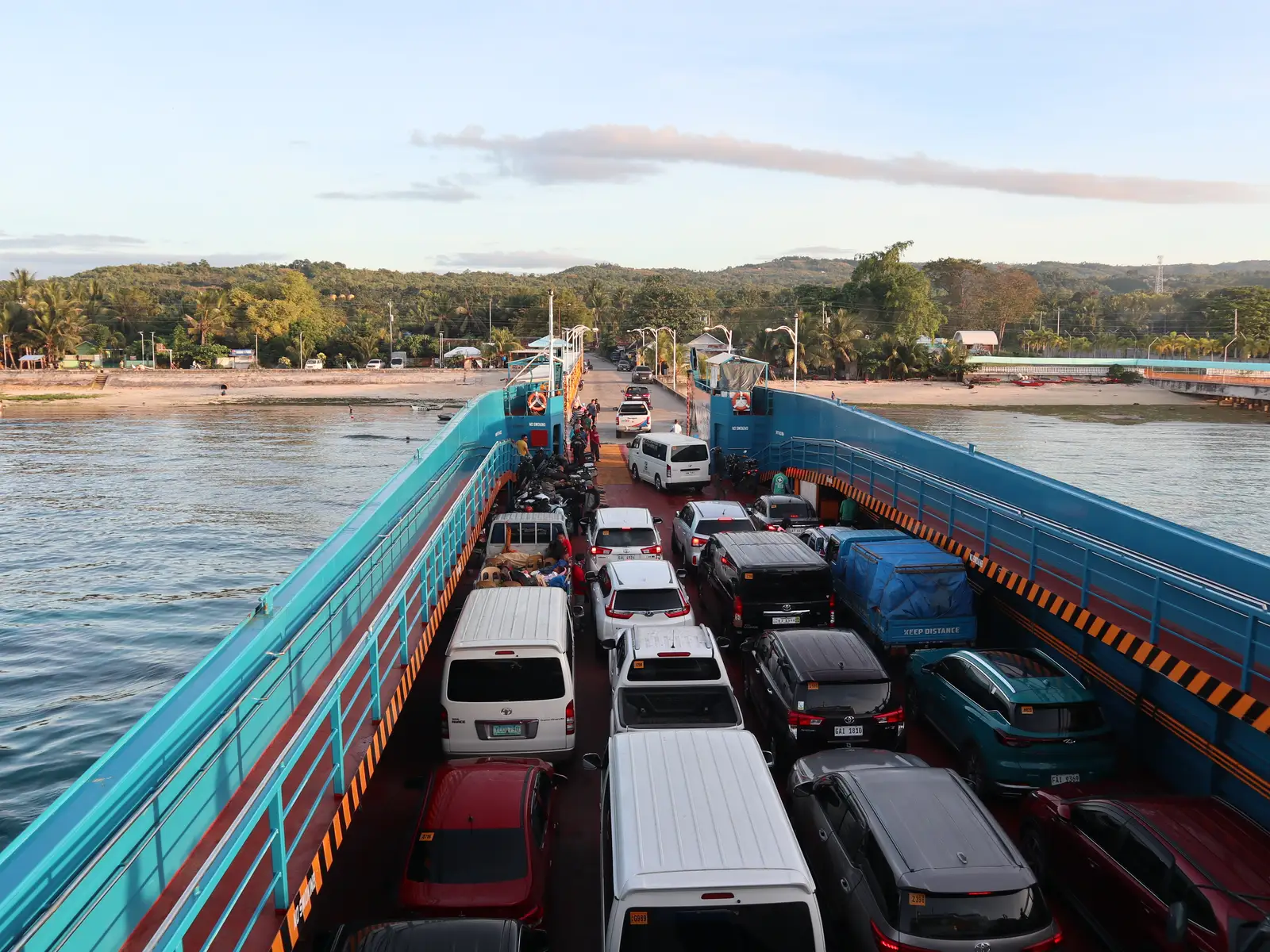
Two RORO ferry crossings link south Cebu with Negros Oriental: Liloan (Santander) to Sibulan, right beside Dumaguete, and Bato (Samboan) to Tampi, a little further north. Maayo Shipping sails Liloan-Sibulan nine times a day each way from 4:30 AM to 10:30 PM. For Bato-Tampi, every published schedule agrees on seven departures each way: 5:00 AM, 8:00 AM, 10:30 AM, 2:00 PM, 5:00 PM, 8:00 PM and 11:30 PM. Some sources list extra boats, so treat those seven as the dependable floor and confirm locally if you need a sailing between them. Both crossings take vehicles. We do not print a Bato-Tampi fare because current sources disagree by more than double and none is the operator.
If you have tried to look up the Cebu to Dumaguete ferry online, you have probably found three different timetables on three different sites, most of them out of date. This page exists to fix that: the times and fares below are checked against Maayo Shipping’s own announcements and their live booking portal, and we state the verification date so you know exactly how fresh the information is.
There are actually two crossings, not one, and which you should use depends on which side of Cebu you are travelling down, the map and the local advice below sort that out in a minute of reading.
Want the easy version?
Tell us your dates and plan, and we will quote the private car and driver around this guide. No payment now, no obligation.
We’ll pre-fill Sibulan pier → Dumaguete on the form - just add your dates and details.
Pick the right next step
If you are here to work out the onward road leg after the boat, start with the card that matches your side of Cebu and your landing point on Negros.
East-coast Cebu into Dumaguete
Use Liloan to Sibulan if you are coming via Oslob or want the shortest onward run into Dumaguete, Dauin or Apo Island.
West-coast Cebu via Bato and Tampi
Use Bato to Tampi if you are coming from Moalboal, Badian or Barili and do not want to backtrack to Liloan.
Already booked on the Liloan crossing?
The Negros side of that sailing: what happens when you walk off at Sibulan pier, and the 7 km run into Dumaguete or straight on to Dauin, Valencia or Apo Island.
Crossing to dive at Dauin?
Sibulan pier to your Dauin resort gate in one run: about 22 km, 35 to 45 minutes, through Dumaguete without stopping.
Planning both islands as one trip?
See the 6 to 8 day Cebu and Dumaguete loop if the ferry is only one leg of a wider holiday.
Liloan ↔ Sibulan daily departures
Maayo Shipping RORO ferry (carries vehicles and passengers). Nine sailings a day, every day, departure times are the same from both ports in both directions.
- 4:30 AMFirst trip
- 6:00 AM
- 9:00 AM
- 12:00 NN
- 3:00 PM
- 6:00 PM
- 7:30 PMAdded May 2026
- 9:00 PM
- 10:30 PMLast trip
Timetable per Maayo Shipping’s announcement of 1 July 2026 restoring the full regular schedule, cross-checked against their live booking portal on 7 July 2026 and re-confirmed against the operator’s published advisories on 28 August 2026. Sailings can be re-timed or cancelled in rough weather or for maintenance, and this crossing has been re-timed repeatedly through 2026, so confirm with the operator close to your travel date.
The two crossings, and which one to use
Liloan (Santander), on Cebu’s south-east tip, crosses to Sibulan, effectively a northern suburb of Dumaguete: the city centre is 15 to 20 minutes away and Dumaguete’s airport is minutes from the pier. Bato (Samboan), around the corner on Cebu’s south-west coast, crosses to Tampi in San Jose, further up the Negros coast road. Both are Maayo Shipping RORO crossings that take cars and motorbikes as well as passengers.
Coming down Cebu’s east side? Cross at Liloan
The east-coast road through Oslob runs to Cebu’s southern tip, and Liloan Port at Santander is on it. This is the crossing with the verified nine-sailing timetable above, it lands you closest to Dumaguete, and a passenger-only fast craft works the same corridor if you are travelling without a vehicle.
Coming down Cebu’s west side? Cross Bato to Tampi
The west-coast road through Barili, Moalboal and Alcantara does not pass Liloan; it reaches Bato in Samboan, around the corner from the southern tip. Cross there to Tampi and pick up a bus (or your driver) on the Negros side, rather than doubling back along the coast to Liloan.
Bato-Tampi times and fares
Every schedule we found contains the same seven departures each way, although some add eight more. We publish that common floor below and leave the disputed extras out. Fares remain unpublished because current figures differ by more than double and none comes from Maayo Shipping. The Negros-side road leg is covered on our Tampi to Dumaguete page.
Travelling light? There is also a fast craft
A passenger-only fast craft runs Liloan-Sibulan in about 20 to 30 minutes. No vehicles: for a car or motorbike you want the RORO timetable above.

Bato to Tampi: the seven departures all sources share
The online schedules look contradictory at first: one lists seven daily sailings and three list fifteen. The useful fact is underneath that disagreement. The seven are included in every list, while the other eight appear only in one identical timetable repeated across three sites. We therefore publish the common seven as a dependable floor, not a claim that only seven boats run.
Maayo Shipping operates this RORO crossing in both directions, carries vehicles and takes about 30 minutes. These times were re-checked on 10 September 2026. Confirm the posted board at the pier if your connection depends on one of the additional sailings.
Departures from Bato and from Tampi
5:00 AM, 8:00 AM, 10:30 AM, 2:00 PM, 5:00 PM, 8:00 PM and 11:30 PM. The same seven times appear in both directions.
Watch the middle-of-day gap
The corroborated list has no sailing between 10:30 AM and 2:00 PM. Do not assume one of the disputed extra boats will run if you have a flight or onward connection to make.
Useful for a late west-coast arrival
The last corroborated Bato-Tampi boat is 11:30 PM, one hour later than the 10:30 PM last sailing on Liloan-Sibulan. Bato is also the natural port when you come down Cebu through Moalboal and Badian.
No fare published
Current third-party figures range from ₱80 to ₱200 and none is from the operator. Buy at the counter and check the posted fare notice rather than planning around an online price.
Doing it overland by bus: which service goes to which port
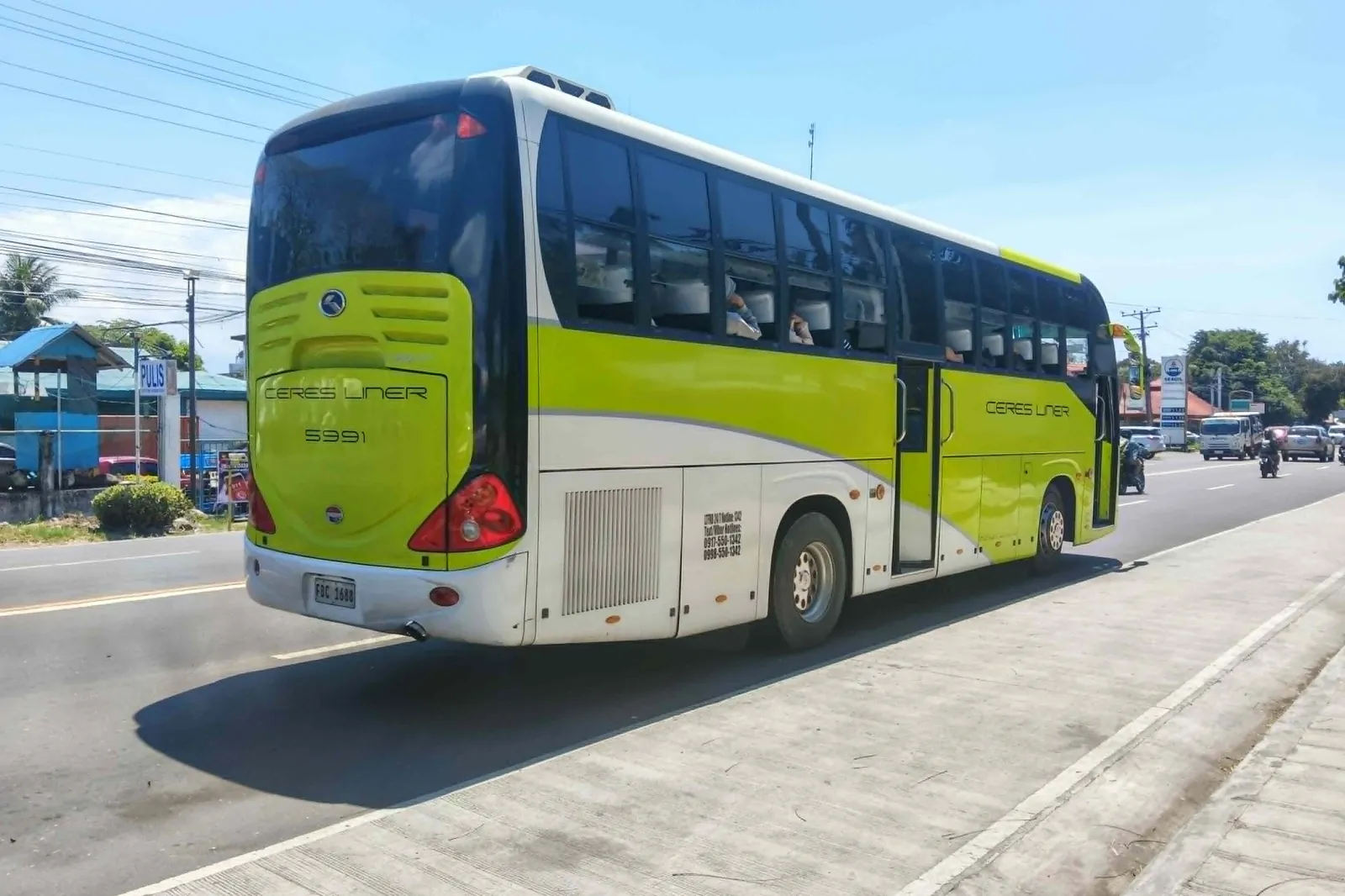
If you are travelling Cebu to Dumaguete by bus, the whole trip is one long land journey down Cebu with a short boat at the end, and the part people get wrong is which bus reaches which port. Every southbound service leaves from the Cebu South Bus Terminal on N. Bacalso Avenue in Cebu City. Vallacar Transit, the company behind Ceres Liner, runs the southern routes, with Sugbo Urban working some of the same loops.
Two of those services run all the way to Cebu’s southern end, one down each coast, and they do not call at the same port. Pick by the coast, not by the destination on the windscreen, because both are signed for Bato.
Down the east coast, via Oslob: this one calls at Liloan Port
Ceres times this service as Cebu City to Bato (Samboan) via Oslob, Liloan Port and Santander. It is the bus to take if you want the short crossing to Sibulan and the closest landing to Dumaguete. Sugbo Urban also runs a Cebu City to Siquijor service down the same east-coast road via Oslob and Liloan Port.
Down the west coast, via Moalboal: this one ends at Bato
The sister service runs Cebu City to Bato (Samboan) via Barili, Dumanjug, Ronda, Alcantara and Moalboal. It never touches Liloan, so if you are coming down the west coast, or breaking the trip at Moalboal, cross Bato to Tampi instead of backtracking.
Prefer not to change at all? Take a through bus
Ceres runs direct Dumaguete to Cebu City services from its Dumaguete terminal on Calindagan Road, timetabled via Bato and Oslob and via Bato and Barili. The bus itself rolls onto the RORO, so you stay in your seat for the crossing and keep your luggage with you the whole way.
Fares and departure times
We do not print bus fares or departure times here, because we have not verified them against the operator the way we have the ferry timetable above. Tickets are bought at the terminal on the day. Check the current times at the Cebu South Bus Terminal or the Dumaguete terminal before you plan around a specific departure.
Fares: the base fare, and the surcharge on top of it
Regular passenger base fare: ₱120
Verified live on Maayo Shipping’s booking portal on 7 July 2026. That is the base fare, and a fuel surcharge may be added to it at the counter (see the section below). Pay at the pier ticket counter, or when booking online.
Why we have not changed that number in August 2026
On 28 August 2026 we could not re-verify the fare at source: Maayo Shipping’s booking portal now sits behind a login, so the live price is no longer publicly readable. Third-party ferry sites currently quote ₱130, ₱190 and ₱200 for this crossing, all with different dates attached, so we are not going to pick one and call it verified. The ₱120 above is the last figure we saw on the operator’s own portal, and we have dated it rather than quietly refreshed it.
Discounted fares
Discounts exist for eligible passengers (students, senior citizens and PWD are the standard categories on Philippine ferries), but we have not verified the current amounts. Bring a valid ID and confirm at the counter.
Vehicles and motorbikes
Vehicle rates change more often than passenger fares and we have not verified the current amounts. Check directly with Maayo Shipping before travelling with a car or motorbike.
Why every website quotes you a different fare
Search this crossing and you will be told it costs ₱120, ₱130, ₱190 or ₱200. None of those sites is necessarily lying, and the fare is not really the number any of them printed. Philippine ferry tickets are a base fare plus a fuel surcharge, and through 2026 the surcharge has been the part that moves.
The rule behind it is public. MARINA, the Maritime Industry Authority that regulates domestic shipping, sets a ceiling on how much of a fuel-related surcharge an operator may add. MARINA Advisory No. 2026-15, signed on 30 March 2026, raised that ceiling from 20 percent to 30 percent nationwide, as part of the measures taken under a declared national energy emergency when global fuel prices spiked. Cebu-based operators moved almost immediately: Lite Ferries, Roble Shipping and Aznar Shipping each announced an additional 10 percent fuel surcharge effective 3 or 4 April 2026, and Maayo Shipping itself re-timed this very crossing from 16 March 2026, saying in its advisory that the change was a direct response to changes in fuel surcharges.
The surcharge is meant to be temporary and to come off again when fuel prices normalise. Whether it does is being argued in public: after fuel prices fell, the Cebu Provincial Board passed a resolution in June 2026, authored by Board Member Andrei Duterte, urging MARINA 7 to review surcharges still being charged on the Cebu to Camotes route, following a similar request from the San Francisco Municipal Council on 12 May 2026. So the number can fall as well as rise, and a fare copied off a blog in March is not the fare you will pay.
What you will actually pay at the counter
The base fare, plus whatever fuel surcharge is in force on the day, plus a terminal fee, which is collected separately at the port and is not part of the ferry ticket. Bring more small cash than the headline fare suggests.
Where to find the real current number
Operators are required to notify MARINA and the public at least three days before putting an increase into effect, by publication or by posting the notice in ports, terminals, vessels and their official platforms. That means the authoritative current fare is on a printed notice at Liloan and Sibulan piers and on the operator’s own channels, not on a travel blog. It is worth a glance at the posted notice when you buy.
Overcharging is a regulated offence, not a local custom
MARINA has said it monitors adjustments and that any form of overcharging will be met with administrative fines and sanctions, and it kept the lower 20 percent ceiling for basic commodities. If a counter price looks far off the posted notice, the posted notice is the one that counts.
What this means if you are quoting a private transfer with us
It is the reason we quote rather than publish a price list. When you accept a quote from us, that is the figure for your trip, agreed before you travel. The ferry ticket itself is yours to buy at the pier and moves with the surcharge, so we tell you what the base fare was when we last checked instead of pretending it is fixed.
How to book
Tickets are sold at the pier on the day, and for most mid-day crossings that is all you need. Maayo Shipping also runs an online booking portal at book.maayoshipping.com. When we checked on 28 August 2026 the portal required an account login before it would show sailings and prices, where it had previously been readable without one, so treat it as a booking tool rather than a way to look up today’s fare. It is worth booking ahead for the first and last boats of the day, or whenever your onward plans depend on making a specific crossing.
Getting to and from the ports
Sibulan pier to Dumaguete and beyond (what we arrange)
A private car meets you at Sibulan pier, timed to your sailing, and has you in central Dumaguete in 15 to 20 minutes, or takes you straight on to Dauin, Valencia, the Twin Lakes or an Apo Island morning boat. The same works in reverse: we get you to the pier comfortably ahead of your departure.
Tampi pier to Dumaguete (what we arrange)
If you cross at Bato instead, you land at Tampi in San Jose, about 18 km up the coast. Your driver meets that sailing too and runs you south into Dumaguete in roughly 30 to 45 minutes, or straight on to Dauin or Valencia.
The Cebu-side road leg
The drive between Cebu City and Liloan port is the long part of the journey, around 4 to 5 hours door to door. Our sister site cebu.travel arranges the Cebu-side transfer, timed to the same sailing.
Public transport
Public buses serve both sides of the crossing, and tricycles cover the short hop between the piers and the nearby towns. It works, it just takes longer and needs more juggling with luggage and boat timings.
Why so many ferry timetables online are wrong
Schedules on this crossing genuinely change. In May 2026 Maayo Shipping ran a reduced timetable for several weeks, then restored the full nine-sailing schedule from 1 July 2026. Any page written during the reduced period, and any page that copied one, now lists boats that do not sail, and pages older than that miss the current times entirely.
That is why this page tells you when it was last verified and against what. When the operator changes the schedule, we update the table and the date rather than leaving a stale copy online.
Frequently asked questions
How long is the ferry from Cebu to Dumaguete?
The passenger-only fast craft from Liloan (Santander) to Sibulan takes about 20 to 30 minutes; the vehicle-carrying RORO sails the same short strait and takes somewhat longer. The drive down Cebu to Liloan port is the long part of the journey, so allow around 4 to 5 hours door to door from Cebu City.
Can you get from Cebu to Dumaguete by bus?
Yes. Ceres Liner buses leave the Cebu South Bus Terminal on N. Bacalso Avenue and run down Cebu to the ferry, and there are also direct Dumaguete to Cebu City services that roll onto the RORO with you still aboard. If you are changing buses yourself, take the east-coast service via Oslob, which calls at Liloan Port for the short crossing to Sibulan next to Dumaguete; the west-coast service via Moalboal goes to Bato instead, for the Tampi crossing further up the Negros coast. Allow around 4 to 5 hours door to door from Cebu City, and more on a public bus with stops.
Why does every website give a different Cebu to Negros ferry fare?
Because a Philippine ferry ticket is a base fare plus a fuel surcharge, and the surcharge moves. MARINA, the regulator for domestic shipping, caps how much operators may add, and it raised that ceiling from 20 percent to 30 percent in Advisory No. 2026-15 on 30 March 2026 during a declared national energy emergency. Several Cebu operators added 10 percent within days, and Maayo Shipping re-timed the Liloan-Sibulan crossing on 16 March 2026 citing changes in fuel surcharges. The surcharges are supposed to be lifted when fuel prices normalise, and in June 2026 the Cebu Provincial Board formally asked MARINA 7 to review surcharges still being charged after prices fell. So a fare published at any point in 2026 may be accurate for its date and wrong for yours. The authoritative current figure is the notice posted at the pier, which operators must publish at least three days before any increase.
How much is the ferry from Liloan to Sibulan?
The base passenger fare was ₱120 when we last verified it on Maayo Shipping’s booking portal in July 2026, and a fuel surcharge is added on top of that at the counter, plus a separate terminal fee at the port. Philippine ferry surcharges are capped by MARINA, which raised the ceiling from 20 to 30 percent in March 2026, and they move with fuel prices, which is why other sites quote anything from ₱130 to ₱200 for this crossing. Operators must post any increase publicly at least three days ahead, so the notice at Liloan or Sibulan pier is the authoritative current price. Discounted fares exist for students, seniors and PWD with valid ID; the current amounts vary, so confirm at the counter.
What time are the first and last ferries?
The first sailing is 4:30 AM and the last is 10:30 PM, with nine sailings a day in each direction, per the full regular schedule Maayo Shipping restored on 1 July 2026 and which we re-confirmed on 28 August 2026. Departure times are the same from both Liloan and Sibulan. This crossing was re-timed several times earlier in 2026, including a reduced schedule while a barge was under maintenance, so check the operator’s current advisory if your plans depend on the first or last boat.
Do I need to book the ferry in advance?
For most crossings you can simply buy a ticket at the pier. Booking ahead on Maayo Shipping’s online portal makes sense for the first and last sailings of the day, and whenever a flight or tour on the other side depends on a specific boat.
Which company operates the Liloan to Sibulan ferry?
Maayo Shipping operates both Liloan-Sibulan and Bato-Tampi as RORO crossings. The Liloan-Sibulan timetable here was verified against the operator. For Bato-Tampi we publish the seven daily times found in every available schedule, while leaving out the disputed extra sailings and all unverified fares.
What time does the Bato to Tampi ferry leave?
Every published schedule we found includes these seven daily departures in both directions: 5:00 AM, 8:00 AM, 10:30 AM, 2:00 PM, 5:00 PM, 8:00 PM and 11:30 PM. The Maayo Shipping RORO takes vehicles and the crossing is about 30 minutes. Some sites list eight additional boats, but they repeat one older timetable, so confirm at the pier before relying on an extra sailing. The corroborated list has no boat between 10:30 AM and 2:00 PM, and its 11:30 PM last trip is one hour later than Liloan-Sibulan’s last sailing.