
Siquijor: is it worth the day trip, and is the "witch island" thing true?
Is Siquijor worth visiting, and is the witch-island reputation true?
Short answer
Yes, for most visitors on the Dumaguete side of Negros: Siquijor is a short, comfortable fast-craft hop across the water to a slower, greener island of waterfall pools, coral-stone churches and quiet white-sand coves, and a single well-timed day covers the highlights easily. Its old reputation for folk healers (mananambal) and herbal potion-making, most visible around Holy Week, is a real living local tradition, not something to be wary of, and it has no bearing on how safe or welcoming the island actually is. Take an early boat over if you only have a day; stay one or two nights if you want a slower loop that also takes in Lazi Church and Cantabon Cave.
Siquijor comes up in almost every Dumaguete-side conversation about Negros, usually in the same breath as two things: how easy the ferry crossing is, and its old reputation as the "witch island." One of those is straightforwardly true. The other deserves an honest answer rather than a shrug or a scary story, so here is both: whether the trip is worth your time, and what that folklore reputation actually is.
We arrange the private car and driver from your hotel or Sibulan airport to Dumaguete port, timed to a sensible sailing. The ferry ticket and anything you do on Siquijor itself are arranged and paid on the island, since it is a separate province with its own transport.
Want the easy version?
Tell us your dates and plan, and we will quote the private car and driver around this guide. No payment now, no obligation.
We’ll pre-fill Siquijor day tour on the form - just add your dates and details.
Is the Siquijor day trip worth it?
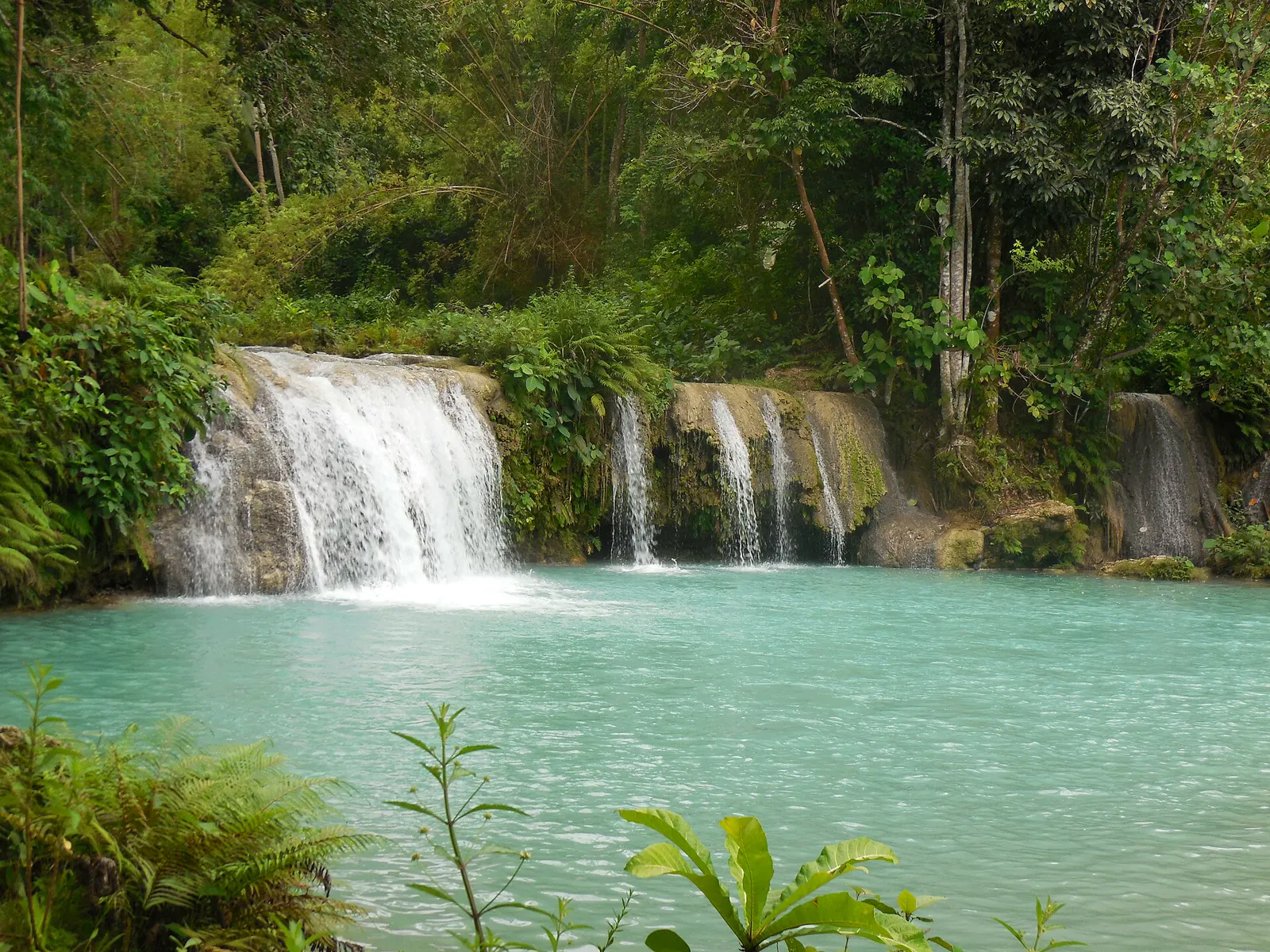
For most people basing themselves in Dumaguete, yes. The fast craft takes around 40 to 60 minutes each way, several times a day, so an early boat over and a late-afternoon or evening boat back gives you a full island loop without changing hotels: Cambugahay Falls’ turquoise tiers and rope swings, the centuries-old balete tree with its fish-nibble foot pool, and a swim at Salagdoong or Paliton beach.
It suits travellers who want a genuinely different, calmer landscape to Apo Island’s reef or Bais’ open water, without adding a night away from Dumaguete. If you would rather not rush a full loop into daylight hours, or want to add Lazi Church and Cantabon Cave without a long day, an overnight is the better call, see below.
Day trip or overnight?
A single day comfortably covers the classic circuit: Cambugahay Falls, the balete tree, and one or two beaches. It is the simpler option if you are based in Dumaguete for a short stay and do not want to pack a bag.
An extra night is worth it if you want a slower pace or to see more of the island: the centuries-old coral-stone Church of St. Isidore Labrador and its adjoining convent in Lazi, one of the oldest and best preserved of its kind in the country, or a guided walk through the limestone chambers of Cantabon Cave. Both sit a fair drive from the main falls-and-beach circuit, so they are easier to fit in without racing the last boat back.
The "witch island" reputation, honestly
Siquijor’s folklore reputation comes from a real, still-living local tradition: mananambal, folk healers who practise herbal and traditional healing, most visibly around Holy Week each year, when healers on the island prepare herbal oils and potions from local plants as part of longstanding local custom. It is genuine cultural heritage, not a horror-movie stereotype, and Catholic devotion (the coral-stone churches, the Holy Week processions) sits alongside it rather than in conflict with it.
None of this has any bearing on visitor safety or how welcoming the island is day to day. Siquijor draws a steady, ordinary stream of day-trippers and beach-and-waterfall travellers, and the healing tradition is a point of cultural interest, not a reason for caution.
Best time to go
Dry season, roughly March to May, gives the calmest crossing and the best conditions at the falls and beaches. Take the earliest fast craft you can if you are doing it as a day trip, both for a gentler ferry ride and a quieter Cambugahay Falls before mid-morning.
If you specifically want to see the Holy Week healing tradition, note that Holy Week is also the region’s busiest local travel week (per our best-time guide), so ferries and any overnight stay are worth booking well ahead.
Getting to Siquijor from Dumaguete
A private car covers the short 15 to 20 minute run from your hotel or Sibulan airport to Dumaguete port, timed to a fast-craft sailing, arranged as a fixed-price quote. The ferry crossing itself, roughly 40 to 60 minutes with operators such as OceanJet and Montenegro Lines, is a public fare paid at the port; confirm current sailing times before you travel. On Siquijor, a car, tricycle or motorbike for your own loop is arranged locally, since it is a separate island province.
Frequently asked questions
Is Siquijor worth visiting from Dumaguete?
Yes for most visitors: it is a short, comfortable fast-craft hop to a slower, greener island with waterfall pools, old coral-stone churches and quiet beaches, and a single well-timed day covers the highlights easily.
Should I do Siquijor as a day trip or stay overnight?
A day trip comfortably covers Cambugahay Falls, the balete tree and a beach or two. Stay a night if you want a slower pace or to add Lazi Church and Cantabon Cave, which sit further from the main circuit.
Is Siquijor really the "witch island"? Is it safe to visit?
The reputation comes from mananambal, real local folk healers most visible around Holy Week when they prepare herbal potions as part of a genuine, longstanding tradition. It is cultural heritage, not a safety concern, and has no bearing on how welcoming the island is to visitors.
How do I get to Siquijor from Dumaguete?
Take a fast-craft ferry from Dumaguete port, about 40 to 60 minutes, with several sailings a day. We arrange a private transfer from your hotel or Sibulan airport to the pier, timed to a sailing; the ferry ticket is a public fare paid at the port.
What is the best time to visit Siquijor?
Dry season, roughly March to May, gives the calmest crossing and the best conditions at the falls and beaches. If you want to see the Holy Week healing tradition specifically, book ferries and any stay well ahead, since it is also the region’s busiest local travel week.